top of page
Vertical Harlem
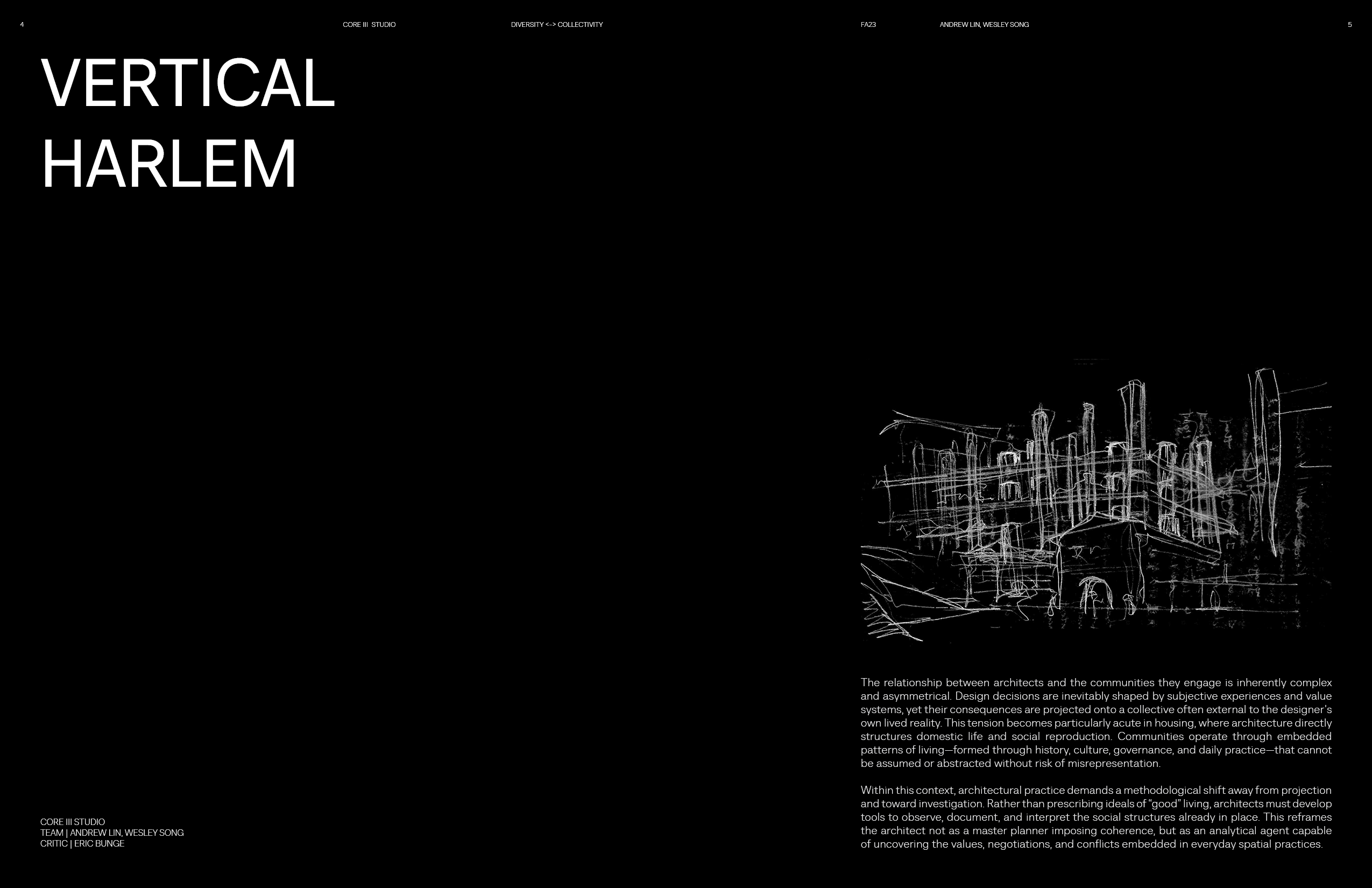
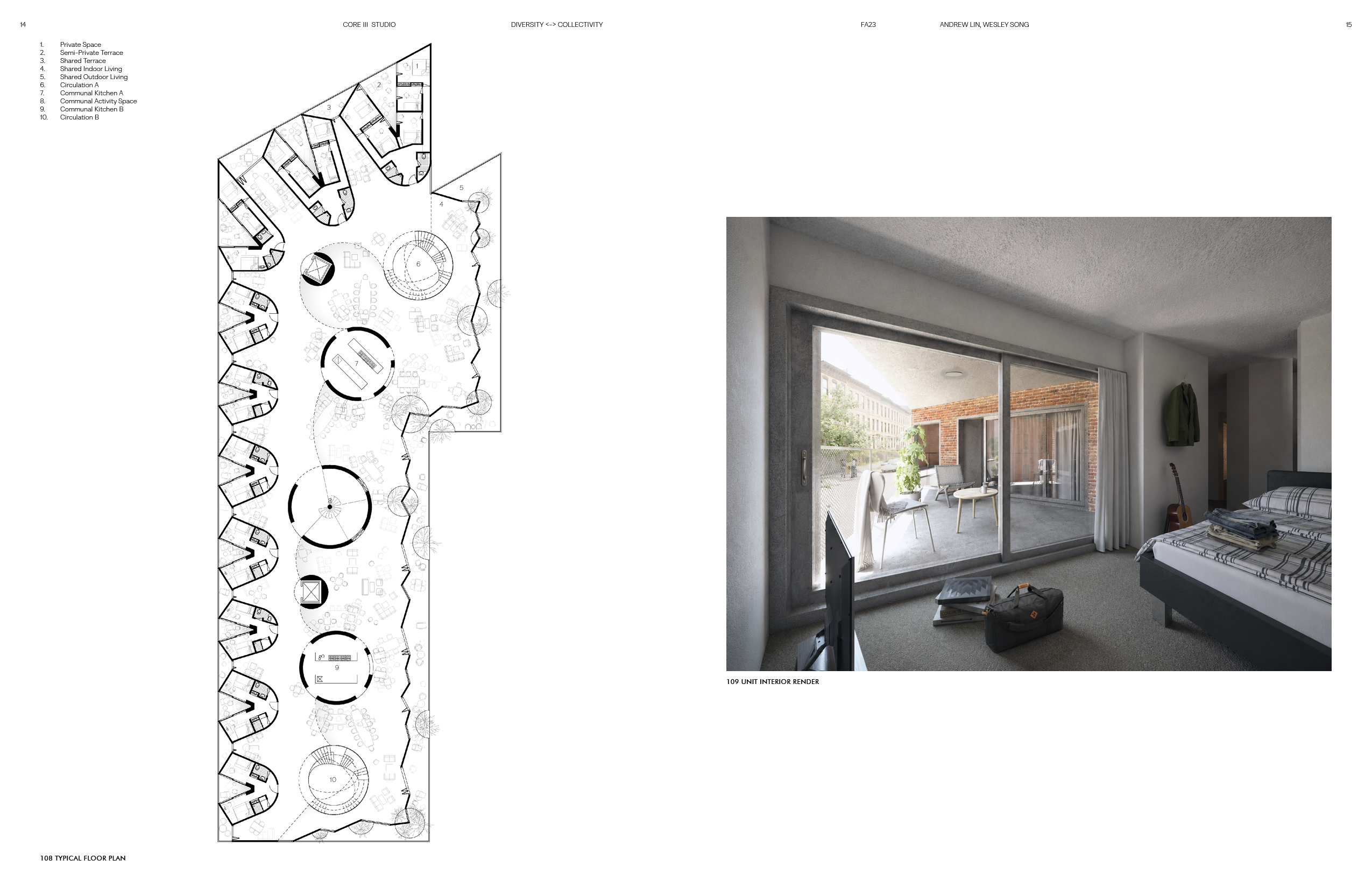
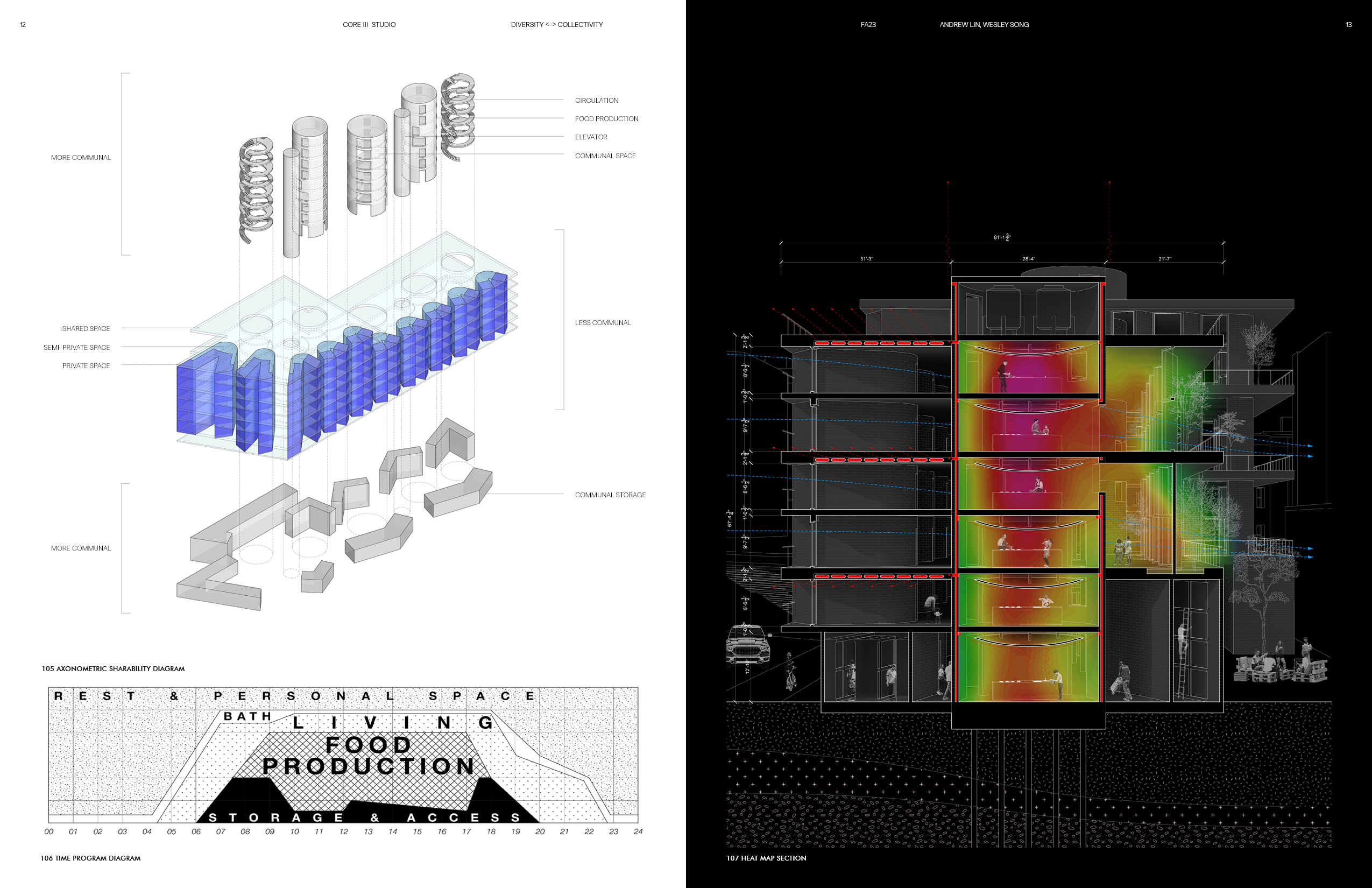
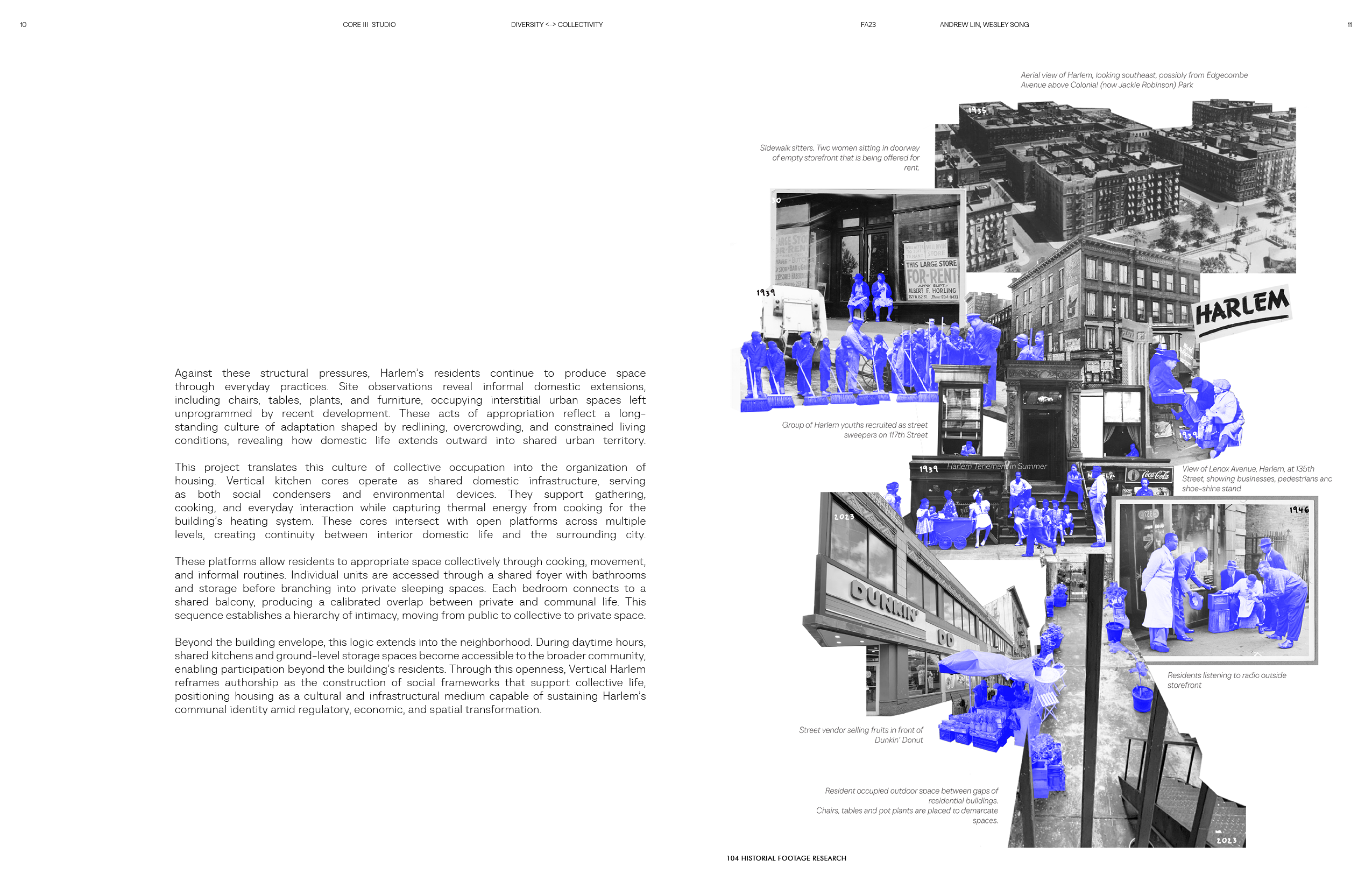
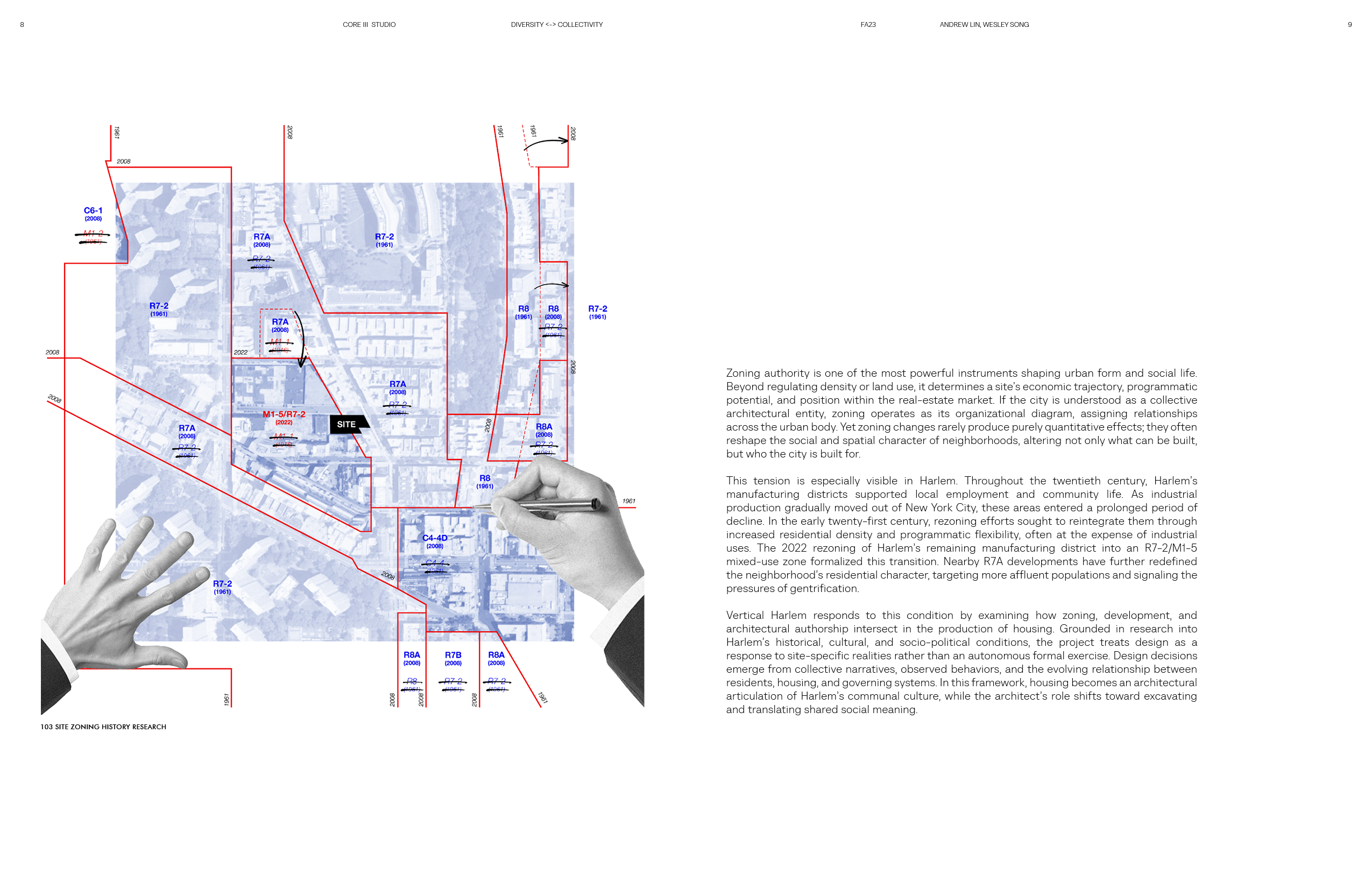
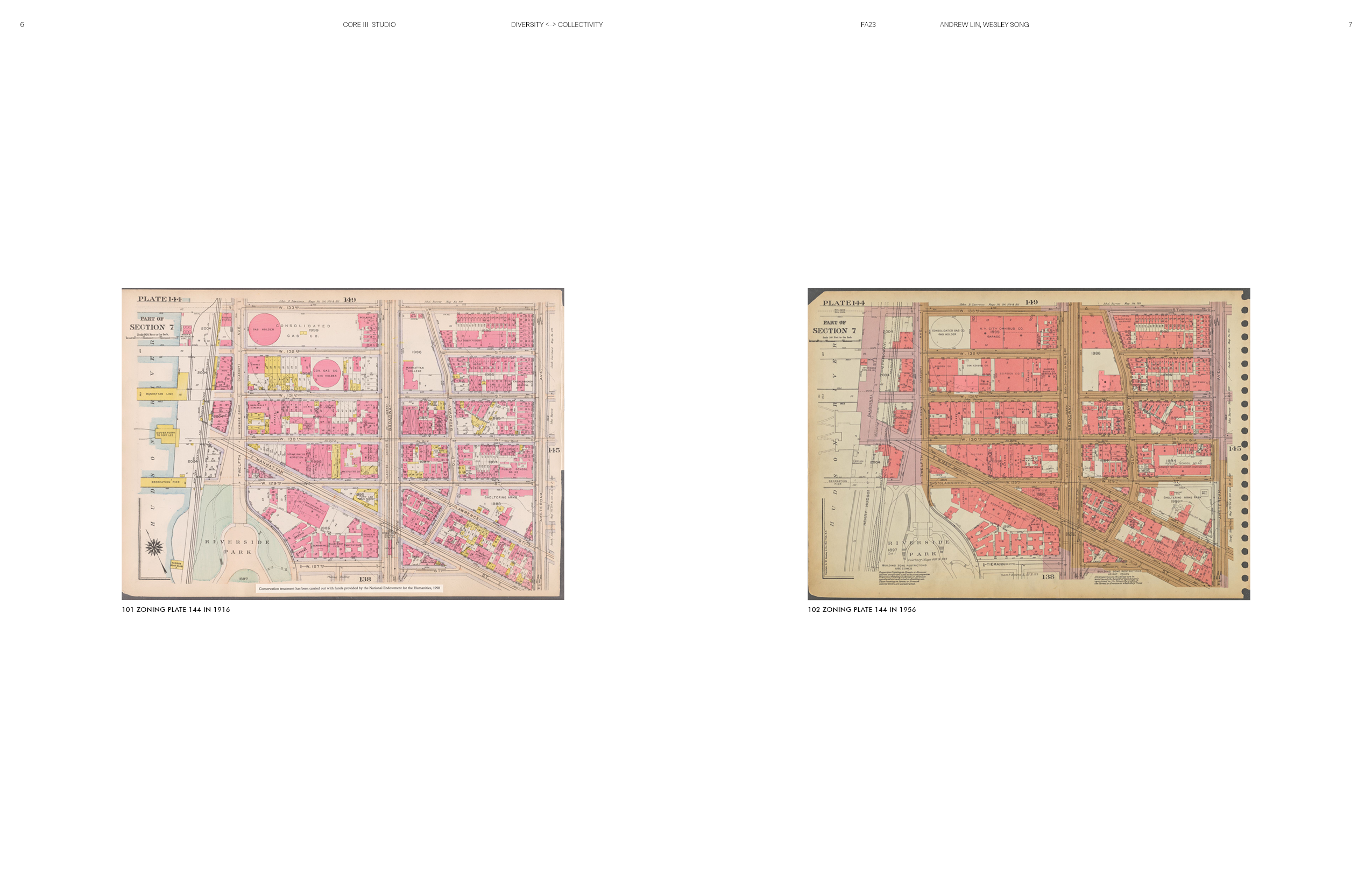
The relationship between architects and the communities they engage is inherently complex and asymmetrical. Design decisions are inevitably shaped by subjective experiences and value systems, yet their consequences are projected onto a collective often external to the designer’s own lived reality. This tension becomes particularly acute in housing, where architecture directly structures domestic life and social reproduction. Communities operate through embedded patterns of living—formed through history, culture, governance, and daily practice—that cannot be assumed or abstracted without risk of misrepresentation. Within this context, architectural practice demands a methodological shift away from projection and toward investigation. Rather than prescribing ideals of “good” living, architects must develop tools to observe, document, and interpret the social structures already in place. This reframes the architect not as a master planner imposing coherence, but as an analytical agent capable of uncovering the values, negotiations, and conflicts embedded in everyday spatial practices.
Project type
Architectural Research
Date
FA23
Location
Harlem, NY
Critic
Eric Bunge

01
Vertical Harlem

01

02
2026 Portfolio v412

03
2026 Portfolio v411

04
2026 Portfolio v410

05
2026 Portfolio v48

06
2026 Portfolio v47

07
2026 Portfolio v46

08
2026 Portfolio v45

09
2026 Portfolio v44
bottom of page